


Have you ever considered Forex trading as a serious job with a real career path? In retail trading circles, it is common to hear people talk about “playing Forex” or “playing stocks.” This casual terminology is highly revealing of a dangerous mindset. When someone refers to trading as a “game” or “playing,” they are unconsciously aligning their expectations with gambling. They treat market charts like roulette wheels, hoping for a lucky spin, and view financial losses as mere bad luck. It is no surprise, then, that the vast majority of retail participants lose their money—often their entire life savings. In reality, only 10% to 20% of market participants achieve consistent profitability. The primary differentiator between the losing majority and the successful minority is not a secret technical indicator, but the fundamental structure of their approach: the successful view trading as a professional business, while the unsuccessful view it as a casino.
One of the most catastrophic mistakes retail traders make is failing to treat their trading activities as a genuine business enterprise. Without clear corporate-style discipline, proper capitalization, and strict risk control, a trader is simply a gambler. Instead of maintaining emotional neutrality and executing a mathematically verified edge, many retail traders act like moths drawn to the flame of market volatility. If you want to escape this cycle and achieve sustainable success in the financial markets, you must transition from a hobbyist to a career professional. You must build a structured, rule-based forex trading career that treats capital preservation as the ultimate corporate mandate.
Key Takeaways
- Shift from Gambling to Business: Stop “playing” the market. Professional trading requires a rule-based approach where emotional neutrality replaces dopamine-seeking behaviors.
- Accept Losses as Business Costs: In a professional forex trading career, trade losses are not personal failures; they are the natural overhead expenses of doing business, similar to inventory costs in traditional commerce.
- Implement Strict Capital Preservation: Avoid high-risk schemes such as Martingale, grid averaging, or loss-holding. Strictly limit your risk to 1% to 2% of capital per trade.
- Focus on Risk-to-Reward (R:R): You do not need a high win rate to be profitable. A solid 1:2 or 1:3 R:R structure allows you to build capital even with a 40% win rate.
- Establish a Professional Routine: A daily schedule consisting of pre-market technical analysis, disciplined execution, and structured journaling is critical for long-term career longevity.
To succeed long-term, we must first break down the financial reality of the market. Like any business, trading involves revenue (winning orders) and costs (losing orders, commissions, platform fees). The goal of a professional trader is simply to ensure that net revenues consistently exceed operating costs over a statistically significant sample of trades. If you leave your costs out of control, your business will inevitably face bankruptcy. In trading, this is known as blowing your account.
Register an Exness account NowGet $1,000 Free for beginners
What Are the Costs of the Forex Market?
Every business has overhead. In traditional commerce, a business owner must pay rent, utilities, employee salaries, and inventory costs before generating profit. In a professional forex trading career, your overhead costs are structured differently, but they are just as real. Understanding and accounting for these costs is the first step toward building a sustainable business plan.
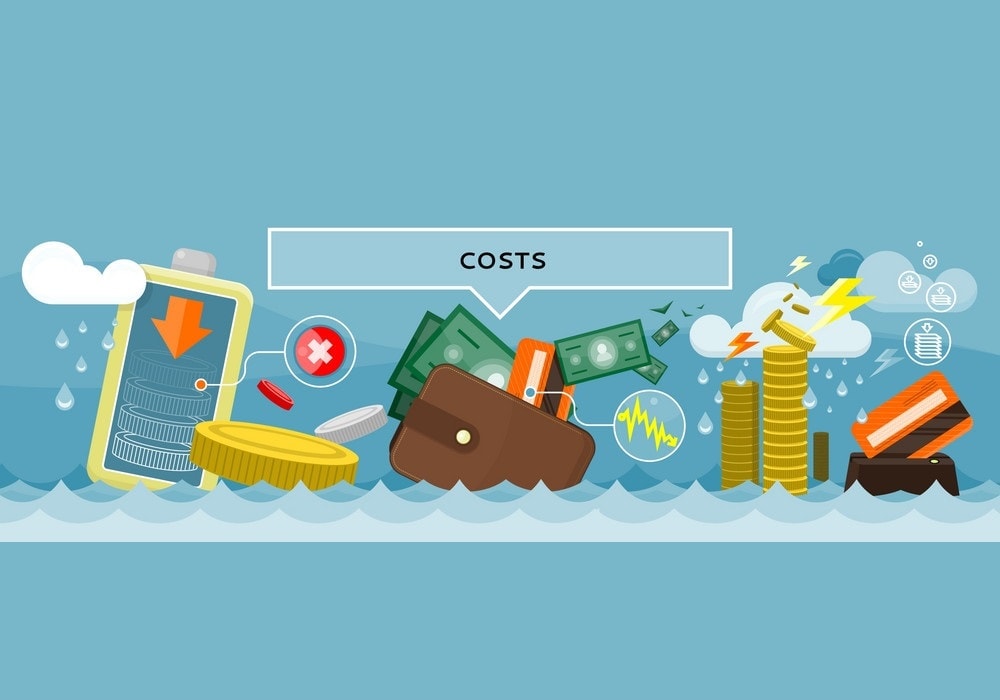
Your operating costs as a trader fall into several distinct categories:
- Trade Losses (Inventory Cost): This is your primary cost. Just as a grocery store must write off expired produce, a trader must write off losing trades. If you cannot accept that losses are a natural, unavoidable part of your business operations, you will struggle with emotional attachment to individual setups.
- Transaction Fees (Commissions and Spreads): Every time you execute a position, your broker charges a fee. This fee comes in the form of a direct commission per lot or a spread (the difference between the bid and ask price). For high-frequency traders, these transaction costs can add up to thousands of dollars annually and must be optimized through competitive broker selection.
- Hardware and Physical Infrastructure: To operate at a professional level, you require reliable physical tools. This includes a high-speed computer, multiple monitors, an uninterrupted power supply (UPS) to protect against blackouts, and a high-speed fiber internet connection with a secondary cellular backup.
- Software and Analytics: Professional traders rely on charting tools (e.g., TradingView Premium), trade journaling software (such as Edgewonk or Myfxbook), data subscriptions, and Virtual Private Servers (VPS) to host trading terminals and ensure low-latency order execution.
Amateurs often enter the market believing they can avoid these costs entirely, imagining perfect scenarios where every trade is a winner. A professional trader accepts that these costs exist and seeks to ensure that the revenue generated from winning setups exceeds these combined expenses. The primary objective is to maintain a positive statistical expectancy.
So How Do You Make Forex Trading Profitable?
To run a profitable trading business, you must focus on two variables: your win rate and your risk-to-reward ratio. You do not need to predict the future to make money; you only need to execute a system with a positive expectancy.

Conceptually, there are two pathways to profitability in trading:
- High Win Rate / Lower Risk-to-Reward: Winning a high percentage of trades (e.g., 70% to 80%) while maintaining a relatively small profit target compared to your risk.
- Moderate Win Rate / High Risk-to-Reward: Winning a lower percentage of trades (e.g., 35% to 50%) but ensuring that your average winning trade is significantly larger than your average losing trade.
Most professional market participants agree that the second approach is far more realistic. Trying to maintain an 80% win rate puts immense psychological pressure on a trader, as a single unexpected market event can wipe out weeks of small gains. Conversely, by focusing on a higher Risk-to-Reward (R:R) ratio, you can achieve substantial profitability even with a relatively low win rate.
For example, if you maintain a strict 1:2 R:R ratio on all setups (meaning you risk $100 to make $200), you only need a 40% win rate to generate consistent profits. Let’s look at the mathematics of a 10-trade sample under a 1:2 R:R model with a 40% win rate:
- 6 losing trades: 6 x -$100 = -$600
- 4 winning trades: 4 x +$200 = +$800
- Net Profit: +$800 – $600 = +$200
As this calculation shows, despite losing the majority of your trades, you walk away with a net profit. Successful career traders are not market psychics. They do not go from win to win. Instead, they accept that losses are normal, keep their losing positions small, and allow their winning positions to run to their logical structural targets. By mastering a rules-based capital management strategy, they ensure that the statistics of large numbers work in their favor.
The Psychology of Transitioning: Hobbyist vs. Career Professional
Transitioning to a professional forex trading career requires a fundamental identity shift. A hobbyist or amateur trader is driven by emotion. They crave the adrenaline of being in the market, fear missing out on price movements (FOMO), and feel their self-worth rise and fall with the outcome of every trade. A career professional, on the other hand, approaches the market with clinical detachment, executing setups strictly according to protocol.
To help you understand this psychological transition, study the following comparison table which highlights the core differences between a gambling mentality and a professional trading career:
| Operating Characteristic | Gambling Mentality (Amateur) | Professional Trading Career |
|---|---|---|
| Primary Motivation | Seeking fast wealth, market excitement, and dopamine spikes. | Generating long-term compounding returns through a systematic edge. |
| Risk Parameters | Arbitrary lot sizes, doubling down on losses, trading without stops. | Strict 1% to 2% risk limit per trade; hard stop-losses calculated before entry. |
| Analytical Methodology | Relying on social media tips, instincts, and unstructured indicators. | Rule-based price action setups, volume-verified entries, and market structure alignment. |
| Trade Documentation | No records kept; forgetting losses and obsessing over historical wins. | Meticulous trade journaling, capturing charts, entry reasons, and psychological states. |
| Response to Drawdown | Panic, anger, revenge trading, and attempting to win back money quickly. | Emotional neutrality; accepting drawdown as a normal statistical phase of the system. |
What Is the Difference Between a Forex Business and Others?
In traditional business models, success depends on product development, logistics, marketing, and human resource management. To compete, you must develop a superior product and market it effectively to outshine your competitors. This requires managing external factors like customer satisfaction, supply chains, and employee retention.

Forex trading, while structured as a business, has several unique characteristics:
- No Control Over the Market: In a traditional business, you can adjust prices or modify product features to drive revenue. In the Forex market, you are a price taker. You cannot influence or manipulate price action. You can only analyze the market’s current state, identify high-probability conditions, and decide whether to participate.
- No Customers or Inventory: Unlike physical retail or service businesses, you do not need to manage customer complaints or inventory logistics. Your business operations are entirely digital and execution-focused, shifting the entire burden of success onto your personal discipline.
- Extreme Liquidity and Speed: The Forex market operates 24/5, with trillions of dollars flowing through it daily. This high liquidity allows you to scale your business rapidly, but it also enables you to destroy your capital instantly if you fail to manage your risks.
- Self-Generated Rules: In traditional jobs, external structures keep you in check. In trading, you are entirely solitary. You must set your own rules, define your own working hours, and act as your own risk manager. Without self-discipline, this absolute freedom is highly destructive.
Because you cannot manipulate the market, your success depends entirely on self-mastery. You must continuously refine your trading strategy, manage your emotional triggers, and strictly adhere to your business plan. Professional traders do not rely on tips from social media channels, automated “get-rich-quick” bots, or random luck. They rely on their ability to execute a rule-based strategy consistently under changing market conditions.
The Capitalization Rules and Transition Strategy
One of the most destructive myths in retail trading is that you can start with a tiny account—such as $100 or $500—and quickly grow it into a full-time income. In reality, attempting to generate a living wage from an under-capitalized account forces you to take on excessive risk, which inevitably leads to account liquidation.
To treat trading as a real career, you must understand the financial mathematics of capital sizing. A professional, highly skilled trader can realistically expect to make an average return of 2% to 5% per month over the long run. If you require $4,000 per month to cover your household living expenses, let’s look at what size trading account you need to support this lifestyle safely:
- At a realistic 2% monthly return, you require $200,000 in trading capital to generate $4,000.
- At a highly performant 4% monthly return, you still require $100,000 in trading capital.
If you attempt to make that same $4,000 from a $5,000 account, you would need to generate an 80% monthly return. While this might be possible once or twice through sheer luck, doing so consistently is mathematically impossible. Achieving those returns requires taking on extreme leverage, which will quickly wipe out your capital during a normal market drawdown.
Therefore, a professional transition strategy is essential. If you are currently employed, do not quit your day job to trade full-time. Instead, use a structured, multi-phase plan:
- Build a Runway: Accumulate an emergency fund containing at least 6 to 12 months of living expenses. This capital must be kept in a liquid bank account, completely separate from your trading funds. This separation ensures that a bad trading week does not affect your ability to pay rent, protecting your trading from emotional pressure.
- Skill Development Phase: Treat trading as a part-time school. Spend months practicing on a demo account, followed by a small live account, to verify that your system is profitable over a large sample size of trades.
- Explore Capitalization Pathways: If you do not possess $100,000 of personal capital, you can leverage modern proprietary trading firms (prop firms). These companies provide funded accounts to traders who can pass strict, rules-based evaluations, allowing you to trade significant capital without risking your personal life savings.
Strict Risk Management: The Ultimate Survival Mechanism
In a professional trading business, risk management is not an afterthought; it is your core product. Capital preservation must always take precedence over profit generation. If you run out of capital, your business is closed. Therefore, you must establish strict rules to protect your trading capital from catastrophic events.
First, you must understand and actively avoid toxic retail trading strategies. These systems are designed to look profitable in the short term but carry a mathematical certainty of long-term failure:
WARNING: Avoid These High-Risk Trading Systems
Many amateur traders fall victim to systems that promise high win rates but hide catastrophic tail risk. To protect your career, steer completely clear of the following:
- Martingale Systems: This strategy involves doubling your position size after every loss in an attempt to recover your losses with a single win. Mathematically, a normal run of consecutive losses will quickly escalate your position size, leading to margin calls and total account destruction.
- Grid Averaging (Averaging Down): This involves opening additional buying positions as the price falls, or selling positions as the price rises. While this works in range-bound markets, a strong, sustained trend will quickly accumulate massive floating losses, overwhelming your account equity.
- Loss-Holding (No Stop-Loss): Refusing to accept a loss and holding onto a losing position in the hope that the market will eventually reverse. The market can remain irrational far longer than you can remain solvent. A single black swan event can wipe out years of accumulated profits.
Instead of these high-risk gambling strategies, professional career traders follow rule-based capital preservation metrics:
- The 1% to 2% Rule: Never risk more than 1% to 2% of your total account equity on any single trade setup. If you have a $10,000 account, your maximum loss on a trade should be restricted to $100 to $200. With a strict 1% risk rule, it would require 100 consecutive losing trades to completely wipe out your account. This provides you with a massive cushion to weather normal statistical drawdowns.
- Pre-Defined Risk Parameters: Always calculate your stop-loss position and lot size before entering a trade. If the price reaches your stop-loss, the trade must be closed immediately. Do not widen your stop-loss or hope for a reversal. The stop-loss is your business’s insurance policy.
- Volume-Verified Entries: Do not chase price action blindly. Ensure that your entries are verified by structural confirmations. Look for alignments in market structure (such as breaks of structure and retests of supply/demand zones) backed by volume indicators or session-specific liquidity sweeps (e.g., during the London or New York sessions) to avoid false breakouts.
- Maintain a Positive Expectancy Ratio: Focus on setups that offer a minimum Risk-to-Reward ratio of 1:2. This ensures that your wins are always larger than your losses, giving your business a solid mathematical foundation.
The Daily Routine of a Professional Career Trader
A professional forex trading career is built on structured, daily routines. Amateurs trade randomly whenever they open their laptops; professionals treat their day like a structured corporate shift. A consistent routine helps minimize emotional decision-making and ensures that you execute your trading plan with high precision.
A standard professional daily routine consists of three key phases:
Phase 1: Pre-Market Preparation
Before you execute any trades, you must analyze the day’s market environment. This involves:
- Economic Calendar Audit: Check for high-impact news releases scheduled for the day (e.g., Non-Farm Payrolls, Consumer Price Index, central bank interest rate decisions). Professional traders avoid entering new positions immediately before high-impact news releases due to the risk of extreme slippage and unpredictable spreads.
- Multi-Timeframe Market Structure Mapping: Analyze the higher timeframes (Daily and 4-Hour charts) to determine the overall market trend and key bias. Then, move to lower timeframes (1-Hour and 15-Minute charts) to identify key support and resistance zones, supply/demand order blocks, and major liquidity pools.
- Plan Formulation: Write down your trading scenarios for the day. For example: “If price retraces to the 15-minute demand zone at 1.0850 and displays a volume-verified rejection pattern during the London session, I will look for a long entry targeting the Asian session high.” If your scenario does not play out, you do not trade.
Phase 2: Disciplined Execution
During market hours, your primary task is patience. Professional trading is often boring, involving hours of waiting for your predefined setup to form. When your plan is triggered, execute the trade without hesitation. If the market does not present a setup that meets your exact criteria, do not trade. Sitting on your hands is an active, profitable trading decision.
Phase 3: Post-Market Audit and Journaling
At the end of the trading session, you must document your work. Update your trading journal with details for every trade executed: entry and exit prices, stop-loss size, risk-to-reward ratio, screenshots of the chart setup before and after execution, and your mental state during the trade. This journal is your business’s general ledger. Reviewing it weekly allows you to identify behavioral mistakes and verify that you are executing your edge consistently.
How to Build Your Forex Trading Career: A Step-by-Step Roadmap
Building a successful career in the financial markets is a marathon, not a sprint. You cannot bypass the necessary stages of development. The following structured roadmap outlines the pathway from a beginner to a professional, independent trader:

- Stage 1: Foundational Education: Learn the core mechanics of the Forex market. Understand price action, market structure, liquidity concepts, and technical indicators. Avoid paying for expensive courses that promise instant wealth; focus instead on understanding the structural realities of market auction theory.
- Stage 2: Strategy Definition and Backtesting: Define a clear, rules-based trading strategy. Backtest this strategy across years of historical data to verify its statistical expectancy. Your strategy must specify exactly what you trade, when you enter, how you manage risk, and when you exit.
- Stage 3: Demo Trading and Forward Testing: Test your strategy in real-time market conditions using a demo account. Spend at least 3 to 6 months forward-testing your system. This stage is designed to help you build confidence in your rules without risking actual capital.
- Stage 4: Micro-Capital Execution: Transition to a small live account. The purpose of this stage is not to make significant money, but to test your psychological response to real financial risk. Learn to manage the fear of losing real capital and the greed of winning before scaling your position sizes.
- Stage 5: Scaling and Capital Acquisition: Once you have demonstrated consistent execution over several months, you can begin scaling. You can either deposit more of your personal savings or apply for proprietary trading firm evaluations to secure larger funding. Maintain a strict focus on risk management as your capital scales.
Do not attempt to skip any of these stages. Just as a surgeon must complete years of medical school and residency before performing complex surgeries, a trader must invest time and effort to build their skills before managing significant capital. Believe in your rules, stick to your plan, and treat the market with the respect it deserves.
Register an Exness account NowGet $1,000 Free for beginners
Frequently Asked Questions (FAQ)
Is Forex trading a realistic full-time career?
Yes, Forex trading can be a highly viable full-time career, but it requires the same discipline, education, and risk management as any other professional business. Success is built on compounding capital through a proven statistical edge, not finding quick-rich schemes. Most retail traders fail because they treat it as gambling rather than a structured business.
How much capital do I need to start a Forex trading career?
To earn a full-time living safely, you realistically need $50,000 to $100,000 or more in capital. Professional traders target a realistic return of 2% to 5% monthly. Attempting to live off a tiny account (such as $1,000) forces you to take on excessive risk, which almost always results in losing your capital. Beginners can use proprietary trading firms to access larger capital once they prove their skills.
Why are Martingale and grid averaging strategies dangerous?
Martingale and grid averaging are highly toxic strategies because they involve adding risk to losing positions (either by doubling position sizes or holding onto floating losses without stop-losses). While they may show high win rates in range-bound markets, a strong, sustained counter-trend will quickly escalate losses beyond your account’s capacity, resulting in complete liquidation of your trading account.
What is a realistic win rate for a professional Forex trader?
A realistic win rate for a professional trader is between 40% and 60%. Professionals do not try to win every trade. Instead, they focus on risk-to-reward (R:R) ratios. By maintaining a minimum 1:2 R:R, you can remain highly profitable even with a 40% win rate because your winning trades are twice as large as your average losses.
Can I transition to full-time trading while keeping my day job?
Yes, you should keep your day job during your development phase. You can practice analysis, backtest strategies, and forward-test systems on a demo or micro-account during your off-hours. Only transition to full-time trading once you have a proven track record of profitability spanning at least 6 to 12 months, and have accumulated a separate emergency runway to cover your living costs.


