


“You can only make money in Olymp Trade when your account has money left”
Key Takeaways
- Capital Preservation is the Ultimate Goal: Survival in the financial markets must always precede profit generation. If you run out of capital, you cannot trade when highly profitable opportunities arise.
- The Non-Linear Reality of Drawdowns: Recovering from a loss is mathematically disproportionate. Losing 50% of your capital requires a massive 100% gain just to return to your initial break-even point.
- Implement the 2% Rule: Protect your account by never exposing more than 2% (ideally 1% or less for beginners) of your total account balance to risk on any single trade.
- Steer Clear of High-Risk Systems: Avoid Martingale, grid averaging, or holding losing positions. These destructive methods lead to exponential risk and inevitable account wipeouts.
- Establish a Daily Loss Limit: Use a strict “circuit breaker” policy to shut down trading after reaching a pre-determined loss threshold, protecting you from emotional revenge trading.
Throughout this 20-article series on how to build a consistent income stream, we have covered various technical strategies—most notably the core “Trend + Signal” methodology. However, all the technical analysis, indicator setups, and candlestick patterns in the world are completely useless if your account balance reads zero. In this guide, we shift our focus to the absolute cornerstone of professional trading: how to protect your capital and ensure that you don’t lose money in Olymp Trade. If you can protect your account during difficult market conditions, you will survive long enough to capitalize on the highly profitable trends that inevitably follow.
Many retail traders fail because they enter the market with a lottery mindset, focusing solely on how much money they can make on a single transaction. Professional traders, on the other hand, manage risk first and focus on capital preservation. They know that trading is a game of probability and survival. Today, I will share my personal rules and the mathematical frameworks I use to keep my funds secure while trading Gold, Forex, and major currency pairs.
Before diving deep into these principles, as is my weekly routine, I will share my recent withdrawal from my trading account to my local bank card. Regular withdrawals are not just about enjoying your profits; they are a critical component of risk control. When you remove money from the platform, you transform digital numbers into tangible assets, reinforcing the discipline required to trade successfully.
Register an Olymp Trade account NowGet $10,000 Free for beginners
Proof of the 11th Withdrawal in Olymp Trade
Regularly transferring your profits out of the broker’s platform is an excellent habit. When you keep a large amount of excess profit in your trading account, you are highly susceptible to “account size inflation.” Psychologically, you begin to treat your accumulated profits as “house money” rather than real capital, leading to lax risk parameters, overleveraging, and emotional trades. By withdrawing profits, you materialize your digital gains into real-world purchasing power.
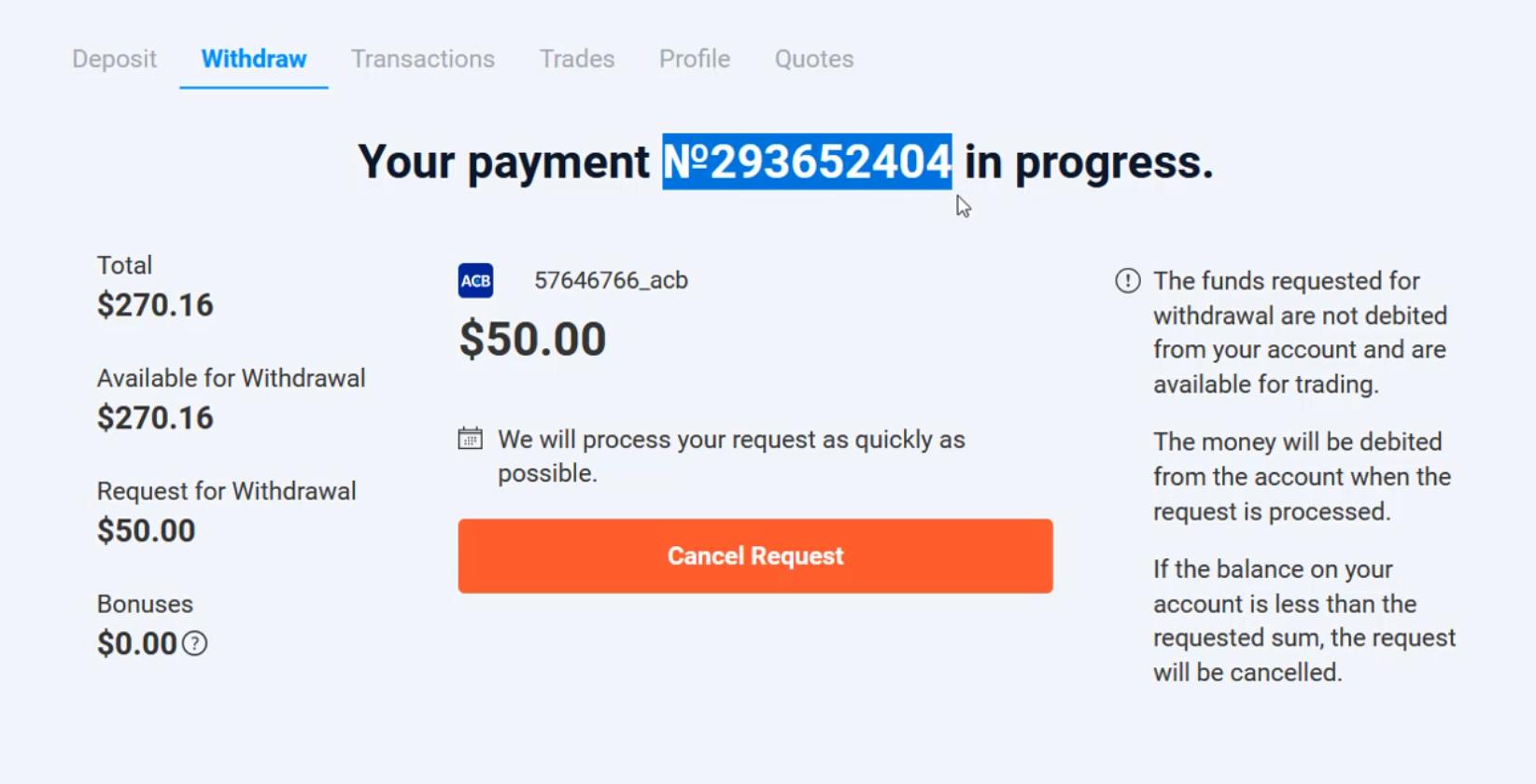
Last week, I initiated two withdrawals from my account back to my ACB bank account. I prefer to keep my weekly profit targets moderate and highly achievable. For me, making a consistent $100 per week is far superior to trying to make $1,000 in a single day and exposing myself to extreme risk. Trading is a marathon, and consistency is the key to compounding wealth over time.

Consistency requires execution discipline. Below is a video showcasing my execution process when placing three UP Forex orders in a clearly defined, verified uptrend. Watch how the entries are spaced and how risk is tightly controlled using structured stop-loss settings. Notice that I do not add to losing trades; I only scale into positions that are already proving profitable.
Why Is Protecting Money So Important?
It seems obvious to say that money is important. We all know that money represents hard work, time, and dedication. However, in the context of financial speculation, capital is much more than just currency—it is your raw material, your business inventory, and your primary weapon. Without capital, you are instantly out of business. In trading, capital protection is the difference between surviving to trade another day and permanent financial ruin.
Opportunity is Only for Those Who Have Money
The financial markets are characterized by long periods of quiet, range-bound consolidation punctuated by short bursts of intense volatility and massive, life-changing trends. Opportunities to build wealth in the markets occur regularly, but they are highly selective: they are only available to traders who still have capital in their accounts when the opportunity presents itself.
Consider the global economic shifts that occurred during the COVID-19 pandemic in 2020. As central banks, led by the Federal Reserve, printed trillions of dollars to stabilize the global economy, currency values fluctuated wildly. The unprecedented expansion of the money supply created a clear, multi-month macroeconomic trend: the US dollar depreciated rapidly against hard assets. Gold prices surged, embarking on a historic bull run that shattered previous all-time highs.
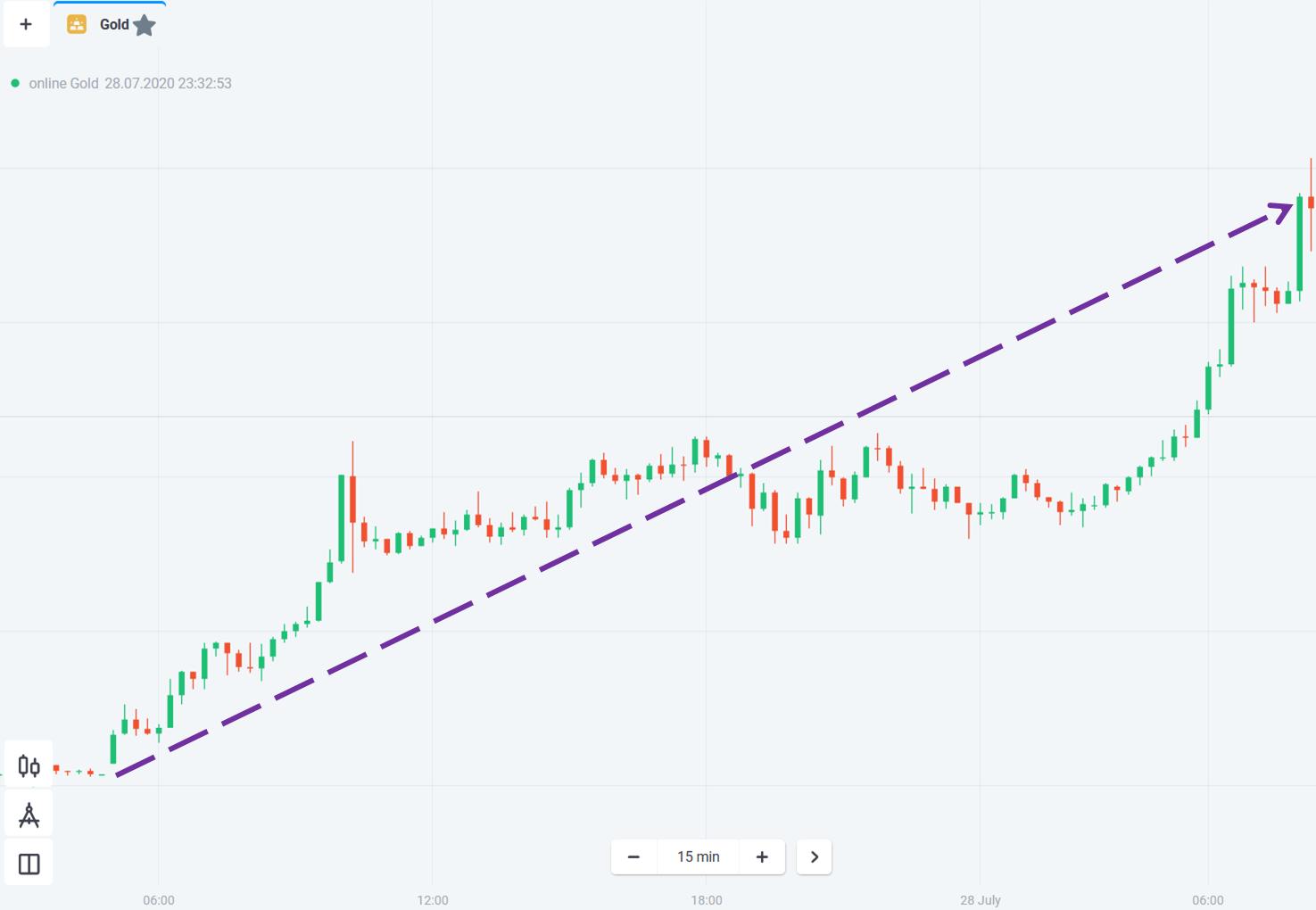
In the chart above, you can see gold breaking out of key technical resistance, climbing from $1,900 to $1,980 in less than 48 hours. Traders who preserved their capital during the quiet months leading up to this breakout were able to capture massive gains. Conversely, those who had already blown their accounts in choppy, sideways markets could only watch from the sidelines.
Similar historic anomalies occur frequently: oil prices dropping below negative $40 per barrel, major currency pairs breaking out of multi-year consolidations, or equity indices entering parabolic runs. These macro events present spectacular risk-reward opportunities. But if your trading account is empty, your strategies, patterns, and experience are useless. Surviving the quiet times is the only way to exploit the lucrative times.
We Are Engaged in a Long War
Professional trading is a war of attrition, not a single battle. On a real battlefield, a soldier’s primary resource is ammunition. If you run out of bullets, your weapon is useless, and your survival is compromised. In the financial markets, your capital is your ammunition. When your account balance hits zero, you are immediately eliminated from the game.

To build a sustainable income in Olymp Trade, you must accept that you will experience losses. Even the most profitable trading systems have drawdown periods. The goal is to design a risk structure that ensures your drawdowns are shallow and easily recoverable. If you lose capital slowly and methodically, you keep your “operational runway” long enough to catch the next winning streak that will recover your losses and push you into net profitability.
Every Platform is Designed to Encourage Overtrading
A critical truth that retail traders must face is that the interface design of modern trading applications is inherently gamified. The prominent, brightly colored deposit buttons, flashing price tickers, and instant execution animations are systematically designed to trigger dopamine release. The broker’s business model relies on trading volume; therefore, the platform is designed to make you trade constantly.
This design creates an environment that stimulates impulse trading, revenge trading, and emotional over-activity. It is easy to log into the platform planning to wait for a clean setup, only to find yourself opening random orders within minutes because of boredom or price action excitement. To succeed, you must recognize these psychological traps and develop strict personal guidelines to defend your capital against the platform’s behavioral triggers.
The Mathematical Reality of Drawdown and Recovery
To understand why capital preservation is critical, we must examine the mathematical reality of trading drawdowns. Many retail traders assume that loss recovery is linear—that if they lose 20% of their account, they simply need to make 20% back to break even. This is a dangerous mathematical fallacy.
Because losses reduce your remaining trading capital, each subsequent trade has less capital to work with. Consequently, the percentage gain required to recover to your initial starting balance increases exponentially as your drawdown deepens. This mathematical relationship is non-linear and operates against you.
| Account Drawdown (Loss %) | Remaining Capital (on $1,000) | Gain Required to Recover to $1,000 | Difficulty of Recovery |
|---|---|---|---|
| 10% | $900 | 11.1% | Easy / Routine |
| 20% | $800 | 25.0% | Moderate |
| 30% | $700 | 42.9% | High / Challenging |
| 50% | $500 | 100.0% | Extremely High / Near-Impossible |
| 70% | $300 | 233.3% | Psychological Ruin |
| 90% | $100 | 900.0% | Statistical Mirage |
As the table clearly demonstrates:
- If you lose 10% of your account, you need an 11.1% gain to recover. This is a very common scenario that can be recovered with a few disciplined, high-probability trades.
- If you lose 30% of your account, you need a 42.9% return on your remaining capital just to get back to even. Generating a 43% gain requires high-level execution and time.
- If you lose 50% of your account, you need a massive 100% return just to break even. Doubling your account is incredibly difficult and requires taking substantial risks, which is highly unlikely for a trader who has just lost half of their money.
- If you lose 90% of your account, you must generate a 900% return on your remaining capital just to recover your original starting balance. This is statistically near-impossible for retail traders and usually leads to total account abandonment.
This non-linear math highlights why allowing drawdowns to exceed 10% to 15% is extremely dangerous. It also explains why emotional traders, after experiencing a significant drawdown, inevitably blow their accounts. The realization that they must double their remaining capital to break even causes them to increase their position sizes, ignore their strategy rules, and take high-risk trades, resulting in a rapid wipeout.
A Dangerous Trap: Martingale and Grid Averaging Systems
Because drawdowns are psychologically painful, many retail traders look for shortcuts to recover losses quickly. This often leads them to risky trading systems like Martingale, loss-holding, or grid averaging.
Martingale is a betting strategy originating from 18th-century France. The premise is simple: every time you lose a trade, you double the size of your next position. When you eventually win, you recover all your previous losses and make a small profit. Grid averaging operates on a similar principle, where you continuously add to a losing position (averaging down) as the market moves against you, hoping for a correction that will make the entire basket of trades profitable.
Let’s look at the math behind a Martingale sequence starting with a $10 trade on a $1,500 account:
- Trade 1: $10 (Loss)
- Trade 2: $20 (Loss) – Cumulative loss: $30
- Trade 3: $40 (Loss) – Cumulative loss: $70
- Trade 4: $80 (Loss) – Cumulative loss: $150
- Trade 5: $160 (Loss) – Cumulative loss: $310
- Trade 6: $320 (Loss) – Cumulative loss: $630
- Trade 7: $640 (Loss) – Cumulative loss: $1,270
By the 7th consecutive loss, you have lost $1,270, and you do not have enough remaining capital ($230) to double your position again to $1,280. Your account is effectively blown. While a streak of 7 consecutive losses might seem rare, in a probability-based environment like trading, it is a statistical certainty over a sample of several hundred trades. Do not use these systems. Protect your capital with strict risk controls instead.
Professional Risk Management Rules
If we reject Martingale and grid averaging, how do we protect our capital? The answer lies in establishing a strict, rule-based risk management system. By setting hard limits on risk, you ensure that drawdowns remain shallow and your account is protected.
The 2% Risk Parameter
The most important rule in professional trading is the 2% Rule: Never risk more than 2% of your total account balance on a single trade. For beginners or those in a drawdown, it is highly recommended to reduce this to 1% or less.
Let’s calculate how this protects you. If you have a $2,000 account, risking 2% means your maximum loss on any single trade is $40. If you experience a streak of 10 consecutive losses (an extreme scenario for a disciplined trader), your account balance will decrease as follows:
- Initial capital: $2,000
- After 5 losses: ~$1,807 (9.6% drawdown)
- After 10 losses: ~$1,634 (18.3% drawdown)
Even after 10 consecutive losses, you still have over 81% of your capital. To recover, you only need a 22.4% gain, which is highly achievable. By keeping your risk per trade small, you remove the emotional pressure from your trading and ensure that no single mistake can ruin you.
The 1:2 Risk-to-Reward Ratio (R:R)
Risk per trade is only one part of the equation; you must also manage your profit targets. You should only enter trades that offer a minimum Risk-to-Reward ratio of 1:2 (ideally 1:3 or higher). This means that for every dollar you risk, you aim to make at least two dollars in profit.
Using a 1:2 R:R ratio completely changes the mathematics of your trading. If you risk $40 to make $80, you only need to win 34% of your trades to break even. Let’s look at a sample of 10 trades with a 40% win rate (4 wins, 6 losses):
- 6 losses at $40 each = -$240
- 4 wins at $80 each = +$320
- Net Profit: +$80
Even though you lost more than half of your trades, you still ended up profitable. Many retail traders focus on high win rates (e.g., 80%), which often leads them to take small wins and let their losses run (a negative R:R). Professional traders focus on high R:R ratios, knowing that a low win rate can still generate consistent, long-term profits.
The Daily Loss Limit (Circuit Breaker)
In addition to trade-specific rules, you must establish an account-level circuit breaker: the Daily Loss Limit. This is the maximum amount of capital you are allowed to lose in a single trading day (typically 5% of your account balance or 3 consecutive losses).
Once this limit is reached, you must close the platform and walk away. Do not look at the charts, do not try to “make the money back,” and do not deposit more funds. The daily limit protects you from emotional revenge trading, which is when the majority of retail traders blow their accounts. By forcing a cooling-off period, you ensure that a single bad day does not turn into an account-destroying event.
How to Protect Money in Olymp Trade Trading
Implementing these risk parameters requires practical strategies on the platform. Here are the two primary execution strategies I use to keep my funds secure.
Strategy 1: Do Nothing (Patience and High-Probability Setups)
“Money is made by sitting, not trading.” – Jesse Livermore
Jesse Livermore, one of the most successful speculators in history, understood that the key to profitability is patience. Many traders believe that they must be active in the market to make money. In reality, the opposite is true. The more trades you open, the more transaction fees you pay, the more you expose your capital to risk, and the more likely you are to make emotional mistakes.
Professional traders act like apex predators. A crocodile does not swim around the river constantly attacking everything it sees. It stays motionless, hidden beneath the water, waiting patiently for hours. When a high-probability target approaches the water’s edge, it strikes with absolute precision. Trading should be exactly the same: spend 99% of your time waiting and observing, and only 1% executing.

Practical Technique: Using Pending Orders on a Demo Account to Scout Breakouts
To prevent impulse trading, I use a specific setup on my Demo account using pending orders. This allows me to scan the market for volatility breakouts without exposing real funds, while keeping my fingers off the immediate “buy” and “sell” buttons.
For example, let’s look at the EUR/USD chart below. The price is consolidating within a clear horizontal range: the support level is identified at 1.17000, and the resistance level is at 1.17425.

Instead of guessing which way the market will break, I set two pending orders on my Demo account:
- A pending DOWN order placed just below the support level at 1.16970.
- A pending UP order placed just above the resistance level at 1.17440.

Once these orders are set, I step away from the computer. The pending orders act as automated scouts. If the price breaks through resistance and triggers the UP order, the platform notifies me. This tells me that a breakout has occurred and a new uptrend is likely forming. Only then do I log into my real money account to prepare for structured entries in the direction of the new trend. This method prevents me from getting chopped up in the sideways range.
Strategy 2: Smarter Execution (Market Exploration and Trend Following)
Once a trend is identified, you must execute your trades in a way that minimizes risk and maximizes profit potential. I call this “smarter execution,” and it consists of two distinct components.
Always Do Market Exploration First
“Never test the depth of a river with both feet.”
If you test the depth of a river with both feet, and it is deep, you will drown. The same principle applies to trading. When you identify a new trend, do not immediately commit your full position size to the first signal. Instead, use a small “explorer” order to verify that the market is indeed moving in your predicted direction.

Olymp Trade provides both Fixed Time Trades (FTT) and Forex. Forex is the superior tool for market exploration because it allows you to set a hard stop-loss. FTT, on the other hand, is a zero-sum, time-based trade where a single pip against you at the expiration second results in a total loss of your trade size.
When you see an entry signal, open a small Forex order with a tight stop-loss. If the market moves in your favor and the order becomes profitable, it confirms that your analysis is correct and order flow is supporting the trend. If the market reverses, your tight stop-loss is hit, and you exit with a minimal, insignificant loss. This is how you test the depth of the market safely.
Make the Most of the Trend
Once the market explorer order confirms the trend, you should focus on maximizing profits within that trend. I have written extensive guides on how to verify and trade trends, which you can read here:
- What Is Uptrend? 3 Safest Strategies To Open An Order In An Uptrend.
- What Is Downtrend? How To Verify And Trade In A Downtrend.
When you are in a confirmed trend, you can scale into your positions (pyramiding) as the market moves in your favor, using technical pullbacks and support/resistance retests as entry signals. This is the opposite of averaging down; you are adding to a winning position, which keeps your average entry price favorable while keeping your overall risk tight.
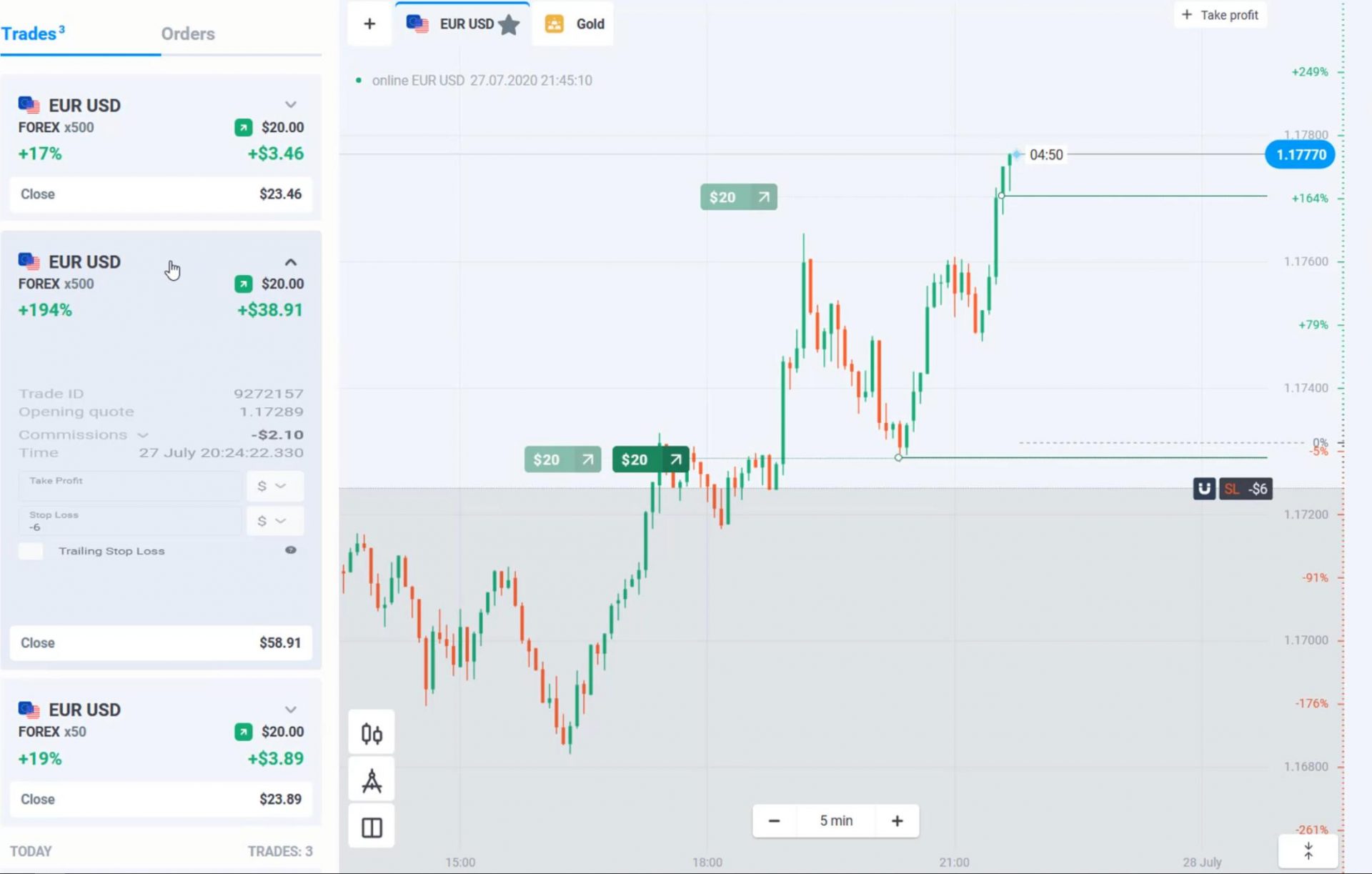
In the chart above, the price breaks through the resistance zone and establishes an uptrend. By using retest signals, we can open sequential UP Forex orders. Because the trend is strong and our stop-losses are moved to break-even as the price rises, we can scale in without violating our 2% maximum risk limit. This is how you generate significant profits while keeping your capital protected.
For a deeper breakdown of this approach, read: 3 tips to never lose money in Olymp Trade (Part 8/20).
Capital Protection Habits vs. Destructive Habits
To summarize the transition you must make to become a consistent trader, let us compare the capital management habits of professional traders against the destructive habits that lead retail traders to lose money in Olymp Trade.
| Professional Capital Protection Habits | Destructive Trading Habits |
|---|---|
| Risks a maximum of 1% to 2% of account equity per trade. | Risks random, large percentages or goes “all-in” on “sure things.” |
| Uses hard stop-losses and enforces a minimum of 1:2 Risk-to-Reward ratio. | Trades without stop-losses, holding losing positions hoping they return. |
| Operates under a strict daily loss limit (circuit breaker) to halt trading. | Engages in revenge trading after a loss to “win back” money immediately. |
| Waits patiently for high-probability, volume-verified setups in line with the trend. | Uses risky systems like Martingale or grid averaging, doubling down on losses. |
| Uses demo accounts and pending orders to scout markets without risk. | Overtrades constantly, clicking the buy/sell buttons out of boredom or impulse. |
The Last Line
There are countless resources online promising to teach you how to make money trading Forex or Fixed Time on Olymp Trade. However, almost nobody teaches you how to keep the money you make. I have repeated these capital protection concepts twice in this series because they are the single most important factor determining your long-term success.
If the market does not offer a clear, high-probability entry signal in line with your strategy, the best action is to do nothing. Walk away, protect your capital, and wait. The opportunity will always come back. As long as you have capital in your account, you remain in the game. I will continue to follow these rules in my own trading, waiting patiently for key setups to grow my account size while keeping risk strictly capped.
If you missed the previous parts of this series, I highly recommend reviewing them to build a complete, rule-based trading system:
- 5 Basic Principles When Trading In Olymp Trade (Part 1/20).
- 4 Things To Prepare Before Starting Trading In Olymp Trade (Part 2/20).
- The Easiest Way To Make Money In Olymp Trade: Determine The Trend (Part 3/20).
- Unbeatable trading strategy in Fixed Time Trade: Trend + Signal? (Part 4/20).
- Practice trading in Olymp Trade easily and safely: Uptrend + Retest (Part 5/20).
- 3 Forex trading skills in a downtrend in Olymp Trade (Part 6/20).
- Make money in Olymp Trade: Be patient or die (Part 7/20).
- 3 tips to never lose money in Olymp Trade (Part 8/20).
- Habits Of Reviewing Trading Logs In Olymp Trade (Part 9/20).
- Why Shouldn’t We Trade In Olymp Trade When The Market Goes Sideways? (Part 10/20).
Register an Olymp Trade account NowGet $10,000 Free for beginners
Frequently Asked Questions (FAQ)
Why do most retail traders lose money in Olymp Trade?
Most retail traders lose money in Olymp Trade because they lack discipline and treat trading like gambling. They overtrade, do not use stop-losses, risk large percentages of their capital on single trades, and fall into emotional traps like revenge trading after experiencing a loss.
What is the 2% risk rule in Olymp Trade?
The 2% risk rule dictates that you should never risk more than 2% of your total account balance on any single trade. For example, if your account balance is $1,000, your maximum risk (distance to stop-loss) should not exceed $20. This protects your account from rapid drawdown during losing streaks.
Why is a Martingale strategy dangerous in Olymp Trade?
Martingale is dangerous because it requires doubling your position size after every loss. While this works in range-bound markets in the short term, a single sustained trend against your position will cause your trade size to increase exponentially. This will exceed your account balance within a few steps (e.g., 7 or 8 consecutive losses), resulting in a complete wipeout of your capital.
How does drawdown math affect my trading recovery?
Drawdown math is non-linear because your remaining capital is reduced after a loss. If you lose 10% of your account, you need an 11.1% gain to recover. However, if you lose 50% of your account, you must achieve a 100% gain just to break even. This exponential difficulty makes capital preservation critical.
How does a daily loss limit protect my capital?
A daily loss limit acts as an account circuit breaker. By forcing yourself to stop trading once you lose a set percentage (e.g., 5% of account balance or 3 consecutive losses), you prevent emotional decisions. This ensures that you step away from the screen, cool down, and preserve your capital for the next day’s opportunities.



that drawdown recovery math dont make sense to i 😅
man, the Martingale warning is spot on; its wild how many still fall for that trap in quantitative strategies.
– It always looks good for a while, but the terminal event is a mathematical certainty.
– This is what I’m constantly battling clients on, they want a ‘high win rate’ without understanding the tail risk. 😬