🔑 Key Takeaways
- Regulatory Oversight: IQ Option Europe Ltd is fully authorized and regulated by CySEC (License 247/14), which ensures segregated retail accounts and client fund protections. International clients fall under unregulated offshore entities (IQ Option LLC), requiring additional vigilance.
- Withdrawal Delays are Common, Not Scams: The majority of payment delays stem from verification backlogs, mismatching bank details, and the broker’s mandatory “refund-to-source” credit card policy.
- Account Blocks Stem from Policy Breaches: Severe violations of terms—such as multi-accounting, trading bots/API abuse, using third-party credit cards, or executing account-buying arbitrage fraud—lead to immediate bans.
- GGtrade vs. IQ Option: Unlike legitimate brokers with strict compliance, clear scams like GGtrade use vague “price feed errors” to lock user balances and confiscate profits permanently.
- Risk Warning: Binary options are highly speculative. Successful trading requires abandoning hazardous schemes like Martingale and adopting strict capital protection rules like the 2% maximum risk rule.
Withdrawal requests status marked as “processing” for days on end is one of the most frustrating experiences a retail trader can face. When it happens on major platforms like IQ Option, panic spreads quickly. In options trading forums and social media groups, the buzz is constant: “Depositing is as quick as lightning, but withdrawing is as slow as a snail!” Some even go as far as to ask: is iq option a scam that refuses to pay profitable investors?
To answer this question objectively, we must look past the emotional reactions and examine the hard facts. Like any major financial institution, IQ Option operates under strict legal structures, compliance regulations, and terms of service. When these guidelines are misunderstood or outright violated, withdrawal delays and account suspensions occur. This comprehensive guide investigates the credibility of IQ Option, explains why withdrawals get delayed, highlights the policies that can freeze your funds, and contrasts legitimate broker operations with verified trading scams.
Register an IQ Option account NowGet $10,000 Free for beginners
Regulatory Breakdown: Who is IQ Option and Are They Licensed?
The foundation of any broker’s credibility lies in its regulatory framework. Unregulated brokers can change terms arbitrarily, withhold funds without explanation, and vanish overnight. Legitimate brokers, conversely, submit to oversight, maintain client fund segregation, and participate in investor compensation funds.
IQ Option operates through distinct legal entities based on the geographical location of the trader:
- IQ Option Europe Ltd: This entity is based in Cyprus and is authorized and regulated by the Cyprus Securities and Exchange Commission (CySEC) under license number 247/14. Because Cyprus is a member of the European Union, IQ Option Europe Ltd must comply with the strict mandates of the Markets in Financial Instruments Directive (MiFID II). This means EU clients benefit from segregated bank accounts (where client money is kept separate from the broker’s operational funds) and coverage under the Investor Compensation Fund (ICF), protecting up to €20,000 in the event of broker insolvency.
- IQ Option LLC (International): For traders residing outside the European Economic Area (EEA), accounts are registered under IQ Option LLC, an entity registered in St. Vincent and the Grenadines. It is critical to note that this international entity is **unregulated** by major financial authorities. The lack of CySEC or FCA oversight for international traders means that client funds do not have the same safety guarantees or compensation schemes as those registered under the European branch. While the platform itself operates on the same software, the legal protections differ drastically.
While the offshore registration of its international branch is a common cost-saving practice among retail brokers, it also places the burden of safety verification on the platform’s operational history and compliance transparency. It does not automatically make the broker a scam, but it does mean traders must pay careful attention to the broker’s withdrawal rules to ensure their capital remains safe.
The Core Controversy: Does IQ Option Really Refuse to Pay Profitable Traders?
The short answer is no. IQ Option does not have a policy of withholding funds from profitable traders simply because they won. However, the broker has an automated system that enforces strict anti-money laundering (AML) and counter-terrorist financing (CTF) rules. If your account activity, verification documents, or withdrawal methods trigger an alert, the system automatically delays processing.
To avoid breach of regulations leading to the cancellation of withdrawals, every trader must understand the basic parameters of the platform:
- A minimum withdrawal of $2 (or equivalent currency) is required, while the maximum processing limit is capped at $1,000,000 per transaction.
- Full identity verification (KYC) is a strict prerequisite before any withdrawal request can be initialized.
- When a withdrawal request status is updated to “Complete” on the dashboard, it indicates that IQ Option has successfully transferred the funds to its payment gateway. Any subsequent delay is the responsibility of your bank or e-wallet service provider.
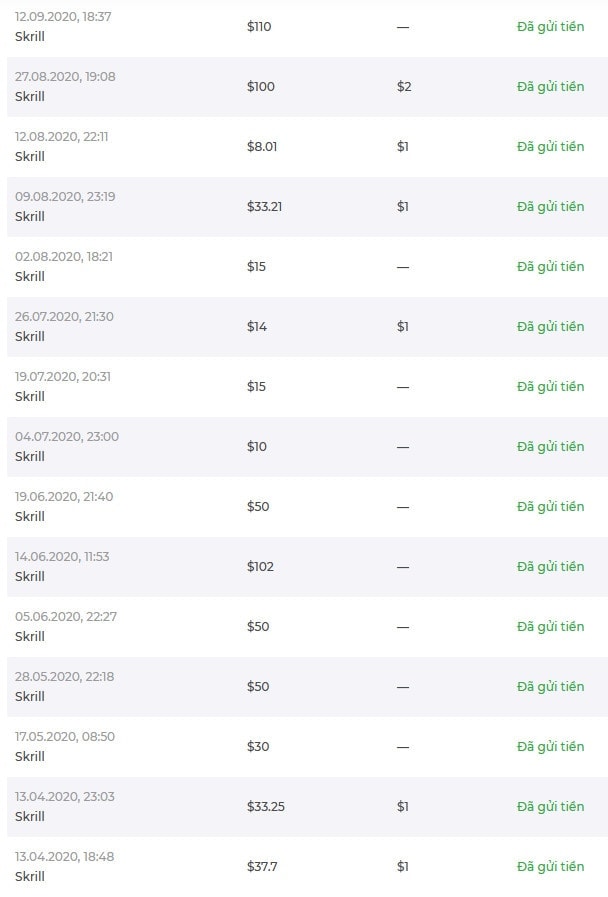
The transaction proof below illustrates the regular processing of profits for a verified trader. While processing is typically completed within three business days, the ultimate transfer time depends heavily on the method chosen.
Analyzing Common Causes for Delayed Withdrawals
When a withdrawal is delayed, traders often jump to the conclusion that the broker is a scam. In reality, most issues stem from a misalignment between trader expectations and the payment gateway workflows. The primary delay factors include:
1. Payment Processor and Bank Clearing Times
Different payment methods have drastically different processing times. E-wallets such as Neteller, Skrill, WebMoney, and AdvCash are the fastest, with processing times ranging from 1 to 24 hours. Local bank transfers and credit/debit card refunds, however, require clearing through multiple intermediary financial institutions. This process can take anywhere from 3 to 9 business days. Under unusual clearing conditions or public holidays, it can extend to 14 days.
2. The Credit Card Refund Priority Policy
One of the most frequent points of confusion is IQ Option’s refund priority system, which is mandated by international anti-money laundering regulations. Under this policy, deposits made via a debit or credit card must be refunded first to that exact card, up to the total amount deposited.
For example, if you deposit $100 via Visa and make a profit of $50, you cannot withdraw the full $150 to an e-wallet or bank account immediately. You must first request a withdrawal of $100 to your Visa card. Once that transaction is processed, you can withdraw the remaining $50 profit via an alternative payment method. Trying to withdraw the entire $150 to an e-wallet before refunding the card will result in an automated transaction rejection, leading many to falsely assume the broker is holding their money.
The “Buying Time” Myth vs. Verification Realities
A common claim in trading forums is that brokers intentionally delay withdrawals to “buy time,” hoping the trader will become impatient, cancel the withdrawal, and lose their capital in the markets.

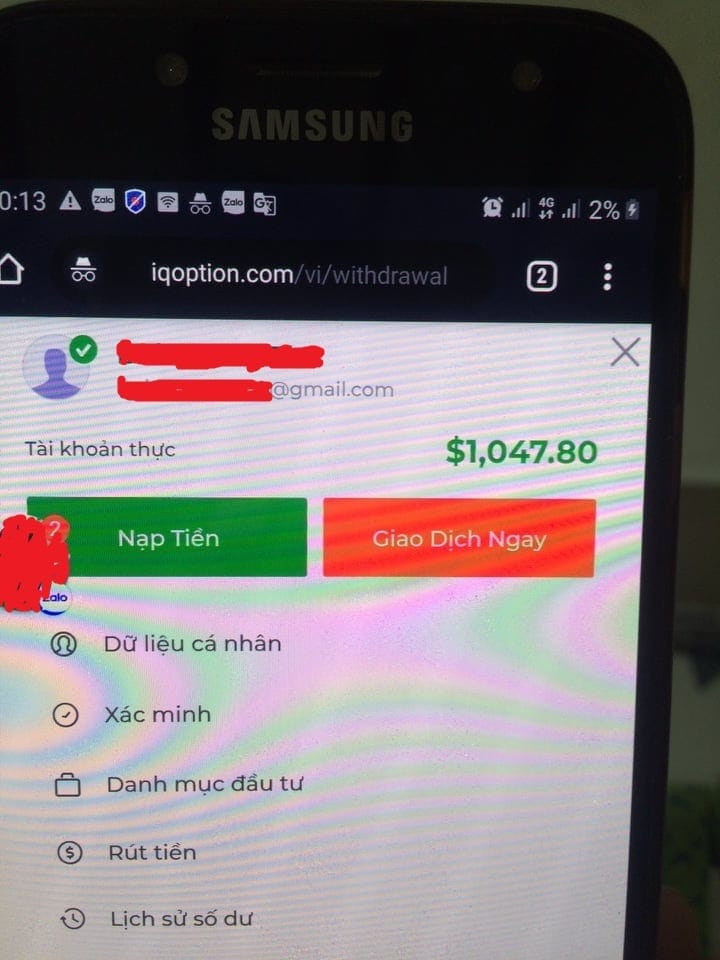
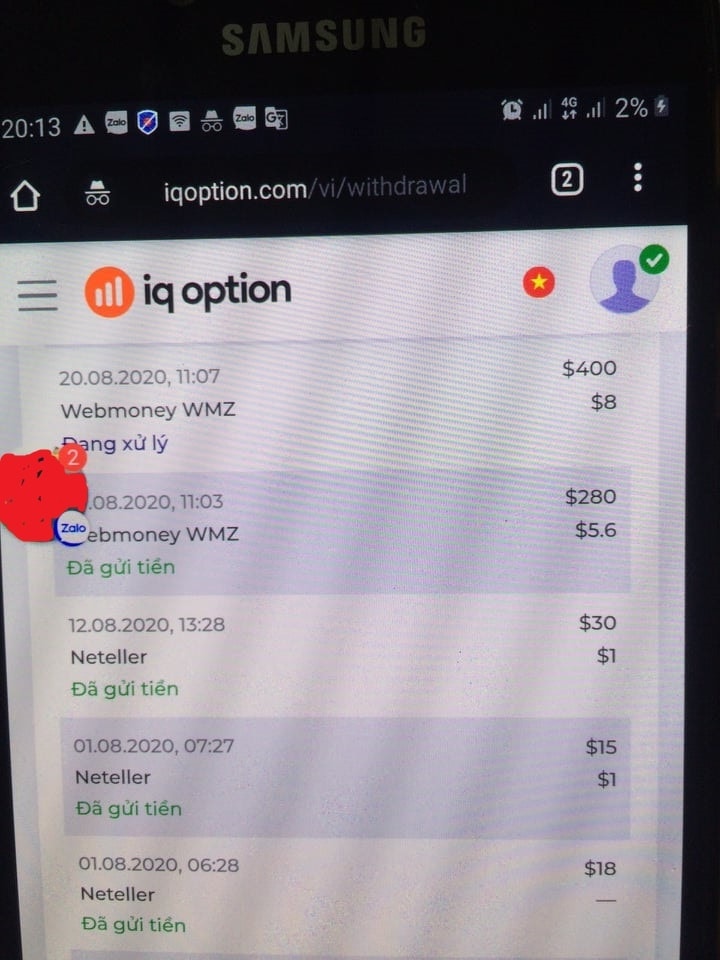
In the case shown above, a trader posted about their frustration with a delayed payment. While such posts attract negative commentary accusing the broker of fraud, seasoned traders often point out that compliance checks are a normal part of financial regulation.

While some forum users express skepticism about the platform’s long-term reputation, others share positive experiences, noting that as long as verification is complete, the funds will arrive.

For the trader in this case, the funds eventually cleared and were credited to his bank account after 11 days. This is a common timeline for bank wire transfers undergoing international audits.

Crucial Advice: If you place a withdrawal request, treat it as locked capital. Never succumb to impatience by canceling the pending withdrawal to place “just one more trade.” This is a major psychological trap. If you win, you simply prolong the verification process; if you lose, your capital is gone, and there is nothing left to withdraw. Maintain discipline, let the audit run its course, and contact customer support if the delay exceeds 14 days.
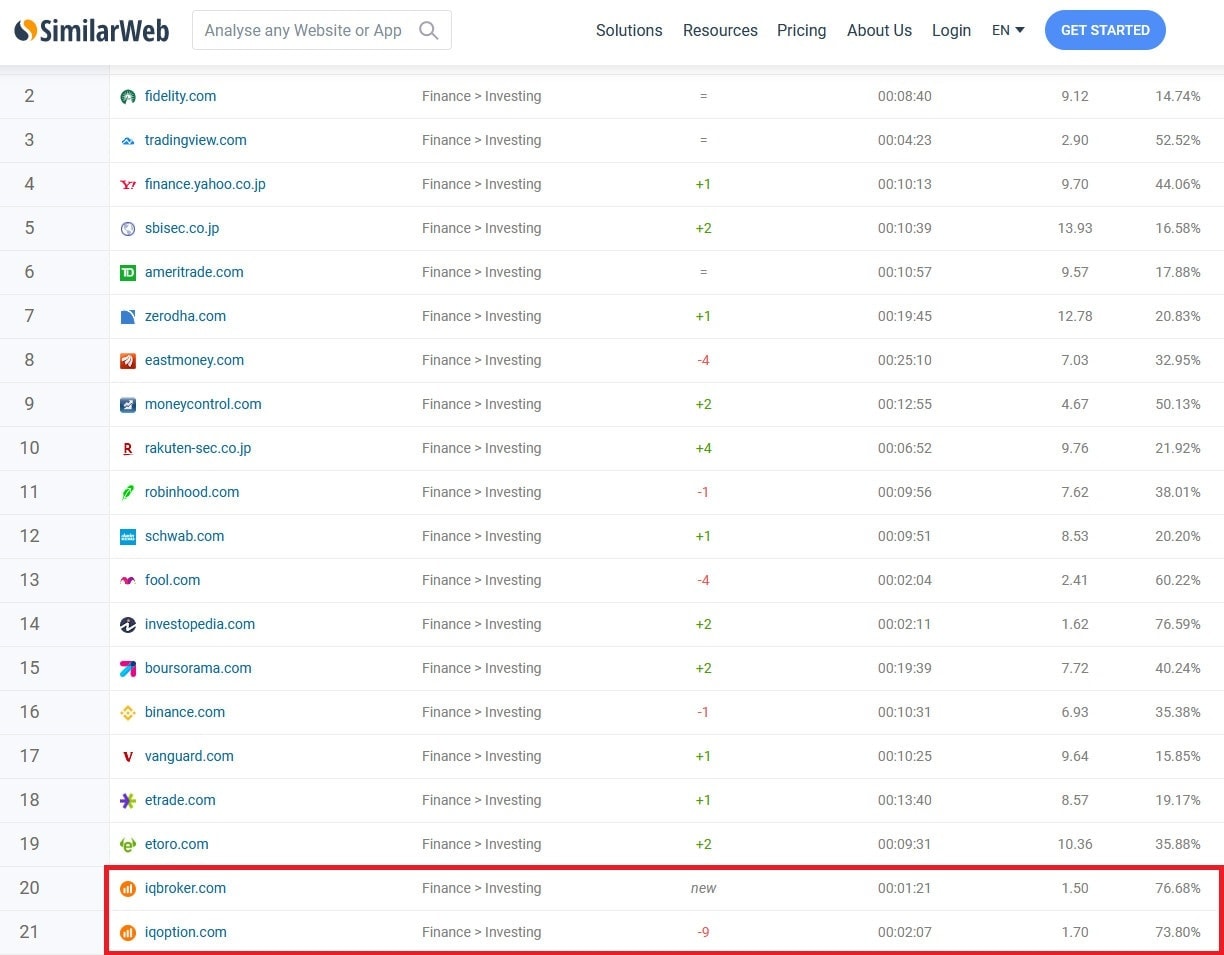
Despite localized complaints, major financial directories and broker review portals consistently rank IQ Option as a functional platform with massive daily transactional volume.
Know Your Customer (KYC): The Essential Verification Checklist
Account verification is not an optional procedure designed to make withdrawing difficult; it is a legal mandate under international banking standards. If a broker permits withdrawals without verifying identity, they risk losing their banking relationships and face severe fines for money laundering facilitation.
To avoid verification delays, ensure you submit high-quality documents matching these requirements:
- Proof of Identity: A clear photo of your passport, national ID card, or driver’s license. The document must be valid, show your full name, photograph, signature, and must not have any cropped edges.
- Proof of Address: A utility bill (electricity, water, gas) or bank statement issued within the last 90 days. The document must show your full name, address, and the issue date. Online utility statements are accepted if they contain the official logo of the service provider.
- Payment Method Verification: If you deposited using a credit or debit card, you must upload photos of the front and back of the card. To protect your data, mask the middle digits of the card number (show only the first 6 and last 4 digits) and completely cover the 3-digit CVV/CVC code on the back. The cardholder’s name must be clearly visible.
Enforcing these standards prevents unauthorized users from hijacking your account and draining your funds. Ensure that all details on your profile match your official documents exactly.
Severe Policy Breaches That Trigger Account Blocks
When IQ Option blocks an account, the user often complains publicly that they have been cheated. However, a review of the platform’s terms of use reveals that most bans are triggered by direct violations of their operational guidelines. The most common infractions include:
1. Automated Bots and API Abuse
IQ Option’s trading engine is designed for manual execution. The use of automated trading software, trading bots, scrapers, or unofficial API integrations is strictly forbidden. If the broker’s fraud detection algorithms identify algorithmic patterns, high-frequency executions, or latency-arbitrage requests, the account is immediately flagged, and all profits are frozen.
2. Multi-Accounting and Identity Buying
Traders are strictly limited to one trading account. Creating multiple accounts under different email addresses—or worse, buying verified accounts from other individuals—is a severe violation.
A common fraud ring operation involves purchasing “negative balance” or historical-loss accounts. Scammers buy these accounts to execute opposite-hedging strategies across different IP addresses, attempting to game the platform’s fraud parameters. When the broker’s compliance system identifies the device ID or IP address crossover, the account is locked.
3. Third-Party Payment Details
Any deposit or withdrawal method used must belong to the legal owner of the IQ Option account. Funding your account using a friend’s credit card or withdrawing profits to a relative’s e-wallet is a direct violation of AML regulations. When detected, the broker will block the account, refunding only the initial capital to the source card while confiscating all generated profits.
Traders who engage in these illicit schemes often claim online that IQ Option does not pay, omitting the fact that they actively breached the contract. If you wish to trade, you must do so under your own name and use payment systems registered to you.
Legitimate Broker Operations vs. Scam Broker Behaviors
To help you evaluate the safety of your trading environment, it is useful to compare how legitimate brokers operate versus the typical warning signs of an investment scam:
| Parameter | Legitimate Broker (e.g., IQ Option) | Scam Broker Behaviors |
|---|---|---|
| Regulatory Licensing | Holds verifiable licenses with regulatory bodies like CySEC (license 247/14). Holds segregated client accounts. | Unregulated, operates via ghost offshore registrations with no administrative oversight. |
| KYC & AML Compliance | Mandatory documentation checks matching international anti-money laundering standards. | Allows immediate withdrawals without verification initially, but locks accounts once profits accumulate. |
| Terms of Service Enforcement | Enforces clear rules against bots, arbitrage, and multi-accounting; processes valid trades normally. | Creates arbitrary clauses to cancel winnings (e.g. blaming price providers for normal winning trades). |
| Profit Payout Policy | Profits are paid out in full, provided they were earned through compliance with trading guidelines. | Freezes profits permanently, citing vague “system audits” that drag on for months. |
| Support Quality | 24/7 technical support with detailed audit updates via official tickets and channels. | Vague, template-based email responses or complete silent treatment when funds are blocked. |
Case Study of a Real Trading Scam: The GGtrade Debacle
To understand what a real trading scam looks like, consider the case of GGtrade, a platform that targeted traders across Taiwan and Southeast Asia, including Vietnam. While IQ Option enforces terms of service, GGtrade was a classic example of an exit scam designed to lure deposits and systematically prevent profit withdrawals.
When profitable traders attempted to withdraw their balances, GGtrade support staff deployed a series of shifting excuses to block the payments:
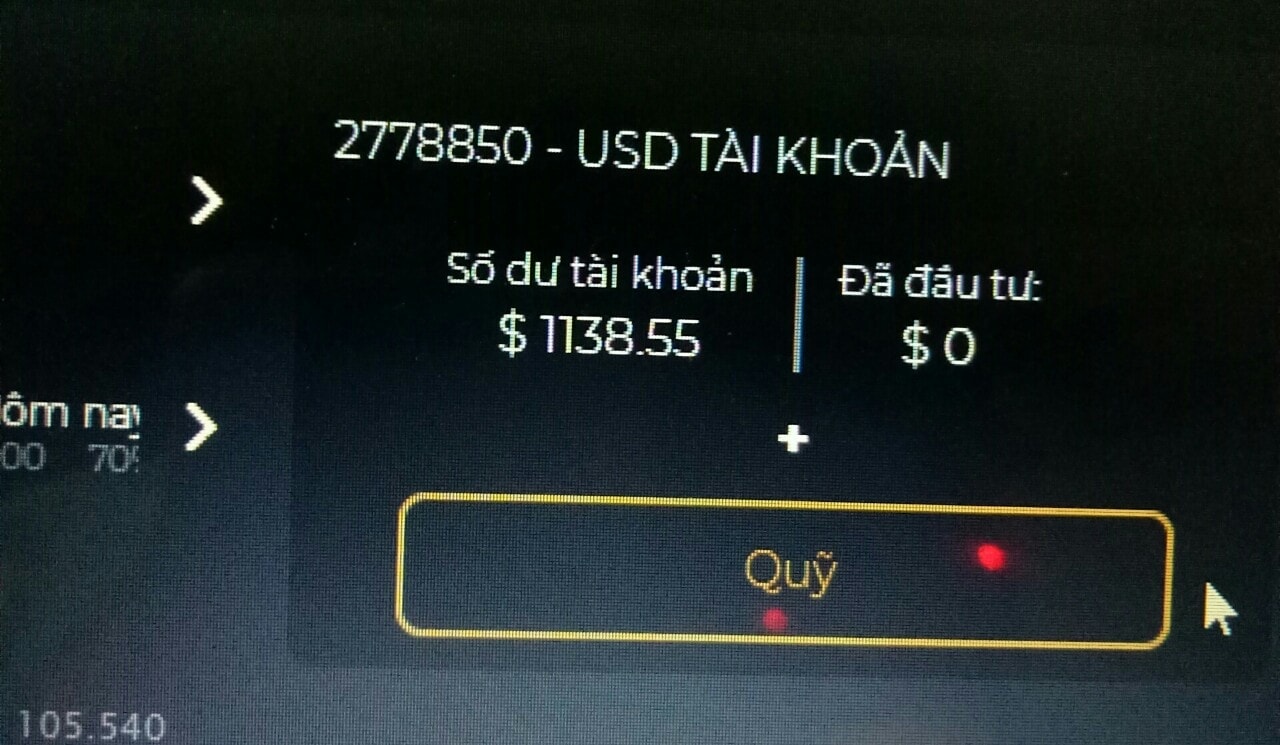
The support team would initially offer confusing, contradictory statements, claiming the platform was undergoing maintenance or that payment channels were temporarily offline.
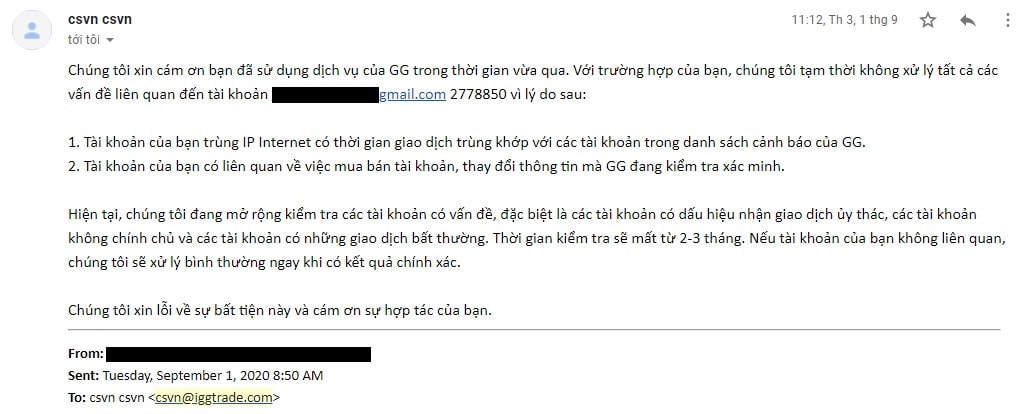
As the trader pushed for answers, the broker would escalate to accusing the trader of fraud, citing vague “investigations.”
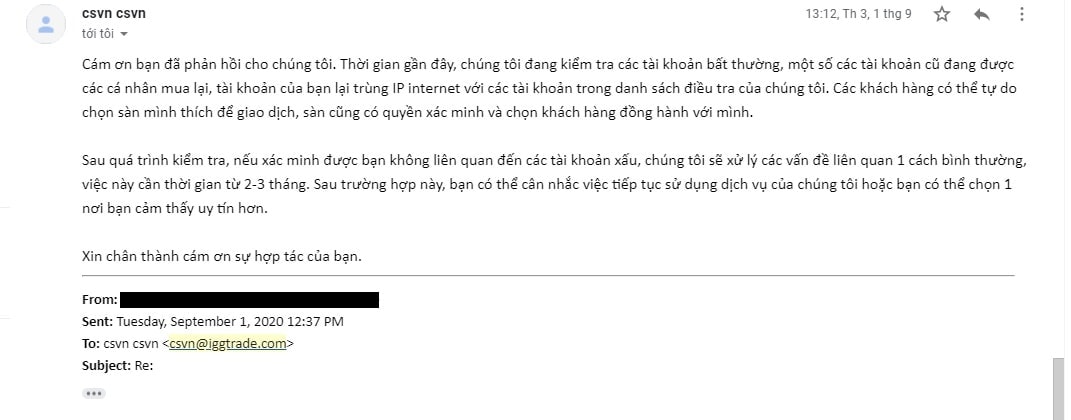
In the end, GGtrade sent emails stating that because the user traded “30-second options,” the prices provided by the system might have been faulty. They claimed they needed 2 to 3 months to audit each transaction, stating that if a single “system error” was found, the account would be permanently frozen and all profits recalled.
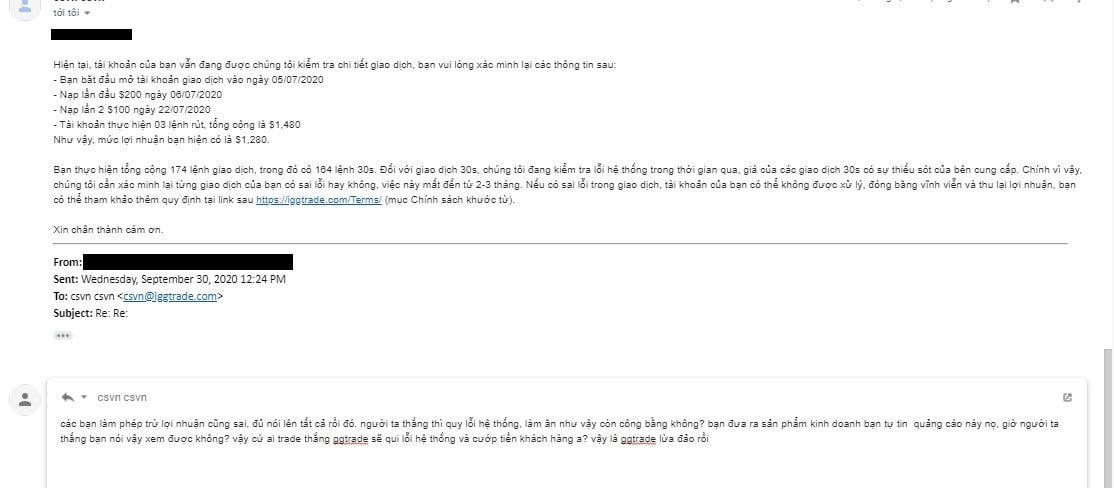
This is the hallmark of a scam broker: they invite you to trade, but if you win, they retroactively declare the price feed faulty to cancel your profits. A legitimate broker like IQ Option maintains robust price verification systems and does not penalize users for trading short-term options, provided they do not use automated bots to exploit latency.
Transitioning to Safe Trading Practices and Proper Risk Management
Trading binary options or digital contracts is inherently high-risk. The simplicity of the “higher/lower” mechanic often lures retail traders into treating it like a casino game. To preserve your capital and build a sustainable trading career, you must abandon dangerous trading habits and implement professional risk management rules.
The Danger of Risky Speculative Systems
Many retail traders rely on dangerous systems like Martingale (doubling your investment amount after every loss in an attempt to recover capital) or grid-averaging (buying more contracts as the price moves against you).
These systems are mathematically designed to fail in markets with trending extensions. A single prolonged trend against a Martingale system can completely wipe out a trading account in minutes. Similarly, holding onto losing options hoping for a reversal is a recipe for catastrophic drawdowns.
Adopting Professional Risk Controls
To protect your trading capital, you must establish and follow a rule-based approach:
- The 2% Rule: Never risk more than 1% to 2% of your total account balance on a single trade. If you have a $1,000 account, your maximum trade size should never exceed $20. This allows you to survive extended losing streaks without destroying your account.
- Risk-to-Reward Ratio: Only enter trades where you have a clear, mathematical edge. In CFD and Forex trading, aim for a minimum Risk-to-Reward ratio of 1:2, ensuring that your winning trades are twice the size of your losing trades.
- Volume-Verified Entries: Do not guess market turning points. Use technical analysis tools, price action indicators, and volume confirmation to verify that institutional buyers or sellers are supporting your direction before entering a position.
Conclusion: What is the Verdict on IQ Option?
When analyzing if **is iq option a scam**, the evidence points to a legitimate, regulated brokerage that operates under a strict compliance model. The complaints of unpaid traders are overwhelmingly linked to incomplete account verification (KYC), attempts to withdraw profits back to credit cards in violation of payment gateways, or direct breaches of the terms of service (such as multi-accounting or bot trading).
If you choose to trade on IQ Option, ensure you complete your KYC verification immediately after registering, use payment methods in your own name, and trade manually. If you experience a delay, remain patient, keep your withdrawal request active, and contact the customer support team for an update.
Register an IQ Option account NowGet $10,000 Free for beginners
❓ Frequently Asked Questions (FAQ)
Is IQ Option a regulated broker?
Yes, for European clients, IQ Option is operated by IQ Option Europe Ltd, which is authorized and regulated by the Cyprus Securities and Exchange Commission (CySEC) under license number 247/14. For international clients outside the EEA, accounts are managed by IQ Option LLC, which is registered in St. Vincent and the Grenadines and does not hold a regulatory license from a major financial watchdog.
Why is my IQ Option withdrawal taking so long?
Withdrawal delays are usually caused by incomplete account verification (KYC), processing times of the clearing banks (which can take 7 to 9 business days), or violation of the payment refund rules. Ensure your documents are fully approved and check if you have refunded your initial deposit back to your credit/debit card before requesting profit withdrawals via other methods.
Can I withdraw my trading profits directly to my credit card?
No. Under international anti-money laundering (AML) laws, you can only withdraw up to the total amount of your initial deposit back to your credit card. Any profits exceeding the deposit amount must be withdrawn using a verified e-wallet (like Skrill or Neteller) or via local bank transfer.
Why did IQ Option block my trading account?
Accounts are blocked if they violate the Terms of Service. The most common violations include using automated trading bots or scripts, maintaining multiple accounts, depositing or withdrawing funds using a third-party payment card, or purchasing verified accounts from other users to run latency arbitrage schemes.
What is the minimum deposit and withdrawal limit on IQ Option?
The minimum deposit amount on IQ Option starts at $10. The minimum withdrawal limit is $2. IQ Option does not charge fees for withdrawals under normal circumstances, though bank transfers may incur standard intermediary bank processing charges.